Ötzi the Iceman’s lineage lives on
by Göran Runfeldt, MN’21
A favorite part of my job leading a research team at a human direct-to-consumer DNA testing lab in Houston, Texas, is finding strong genetic connections between ancient archaeological remains and living and breathing present-day people. Our customers often take a DNA test out of curiosity to learn more about their ancestry or to answer some specific genealogical question. Ancient DNA research has exploded in the last decade. With thousands of historic and prehistoric humans from all corners of the world being tested every year, it’s a great time to explore the connections between the past and the present. My team routinely compares all new data to our customer database by focusing on high-resolution Y chromosomes and mitochondrial DNA, where the DNA doesn’t recombine (mix) every generation. In doing this, we often find unique connections that span thousands of years. In some instances, one ancient individual’s direct paternal or maternal line connects directly with a living individual, thus making the ancient individual the closest direct line relative of a living person, and vice versa.
One American man, Kevin Segura, had a unique patrilineal connection to a mummy in the Lovelock cave in Nevada, which confirmed a new very rare Native American founding lineage. Another American, Jackson Barbour found that his Barber relative had been buried with vampire honors in Connecticut after a tuberculosis outbreak. Recently, we found another strong connection between an American customer and one of the most well-known Paleo-Indian skeletons. In Europe, we are finding both expected and unexpected connections to the royal houses, saints, and bishops. In one important study called The Beethoven Genome Project, we found that Ludwig van Beethoven was not genetically related to the Beethovens, and so we continue the quest to uncover his true ancestry. Every day there is a chance to solve another mystery, and every day a dozen new mysteries appear.
A definitive highlight this year relates to one of the most famous mummies: The 5,000-year-old Ötzi the Iceman mummy from the Tyroler Alps. His genetics have been studied extensively, with his mitochondrial genome first sequenced in 2008. For 18 years, his maternal line was believed to be an extinct dead-end, carrying two unique mitochondrial mutations not found in any other individuals, despite millions tested.
Heddi Abbad, a French citizen with roots in northeastern Algeria, took a DNA test to learn more about his ancestry. It turned out that he matched both of Ötzi’s unique mutations, making Heddi and Ötzi the closest matrilineal relatives to each other, and Heddi the first living human to share the lineage previously believed to be extinct.
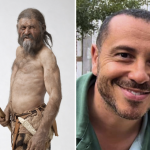
When we contacted Heddi to tell him about his interesting results, he first thought we were joking and that it was some kind of elaborate scam. After assuring him that we were confident of our findings, he realized that we had discovered a very unique connection. His family comes from the Shawiya Berber community of northeastern Algeria. One of the things the 5,000-year-old Ötzi is famous for is his earliest known tattoos. An interesting demonstration of how the past and the present often coincide is that Heddi’s grandmother had the traditional face tattoos of the Berber people.
